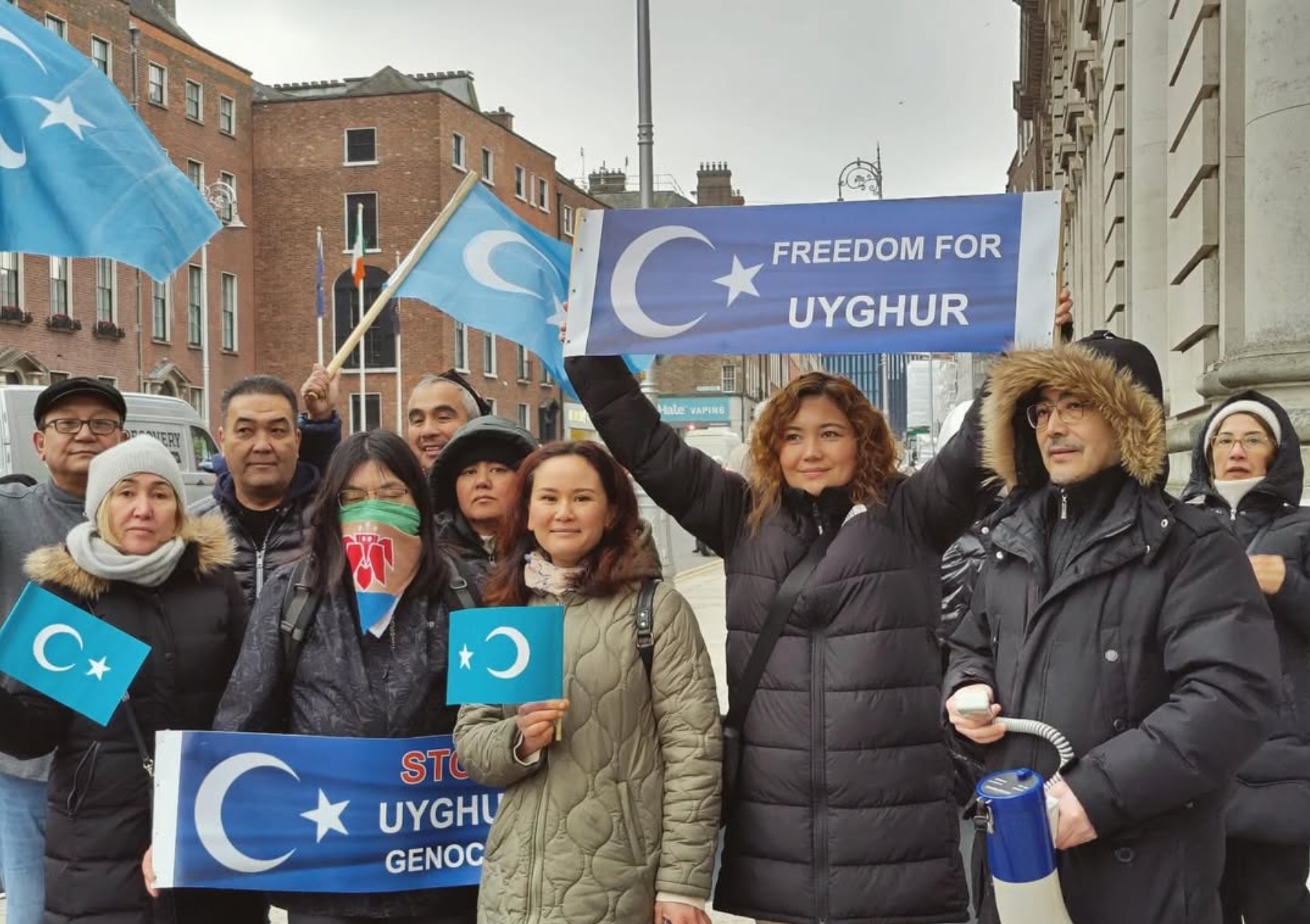
A new complaint filed by the Irish Uyghur Cultural Association (IUCA) and Global Legal Action Network (GLAN) to the Garda National Economic Crime Bureau (GNBECB) and the Criminal Assets Bureau (CAB) targets the revenue generated from the sale of goods alleged to be linked to forced labour and therefore may be the proceeds of crime.
The complaint alleges that the Irish-based entities of SHEIN and Temu, global fast-fashion companies that source most of their products from China and which both have their European headquarters in Ireland, are committing the criminal offence of money laundering – the knowing handling of proceeds of crime – in Ireland. This is due to the ongoing likelihood of Xinjiang cotton, produced through forced labour of the Uyghur people, being used in SHEIN and Temu supply chains and the significant revenue flows through Irish subsidiaries. Revenue generated from the sale of goods produced from forced labour could come within the definition of proceeds of crime, within the meaning of Irish law.
In the complaint, GLAN and IUCA have highlighted publicly available evidence which alleges links between SHEIN and Temu products and Uyghur forced labour. Both companies are channelling hundreds of millions of euros in revenue through Irish subsidiaries. Therefore, based on the evidence, the complaint asks the GNECB to fully investigate the alleged criminal conduct and for the CAB to bring proceedings to identify and seize any assets that may constitute proceeds of crime from the Irish companies, in order to stop forced-labour trade and related revenue flows in Ireland.
Nuria Zyden, co-founder of the Irish Uyghur Cultural Association said, “Uyghur forced labour is not a hidden supply-chain issue. It is a brutal system of persecution. Yet too many businesses continue to profit from it, shielded by opaque supply chains and corporate denials. For Uyghurs, this is not a distant issue. It is deeply personal, urgent and part of everyday life. Even in exile, many of us live with transnational repression and with the fear that our families back home may be subjected to forced labour and other serious abuses. Irish consumers deserve to know whether the goods sold in Ireland are linked to that cruelty. Companies cannot go on profiting from these human rights abuses while claiming ignorance or distance. The evidence is overwhelming; the legal implications are serious and the time for excuses is over.”
Cassie Roddy-Mullineaux, lawyer with GLAN, said, “The landmark 2024 World Uyghur Congress ruling confirmed in the UK courts that forced labour in supply chains creates a serious money laundering risk. This new complaint by GLAN and Irish Uyghur Cultural Association demonstrates that the exact same principles apply in an Irish context.”