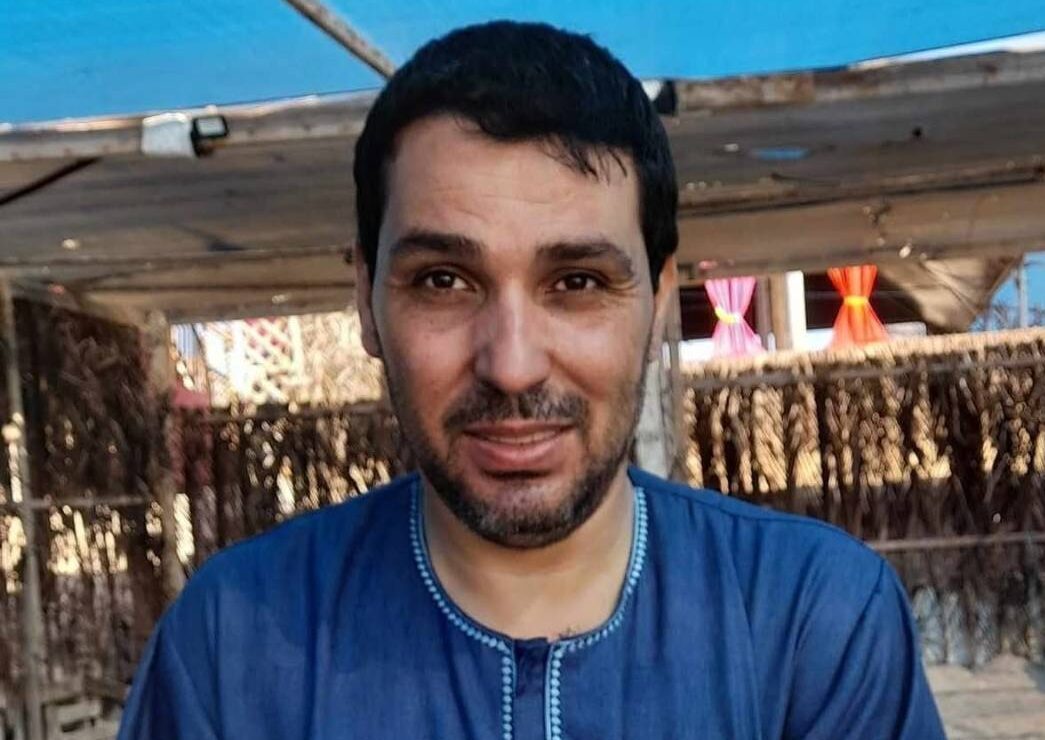
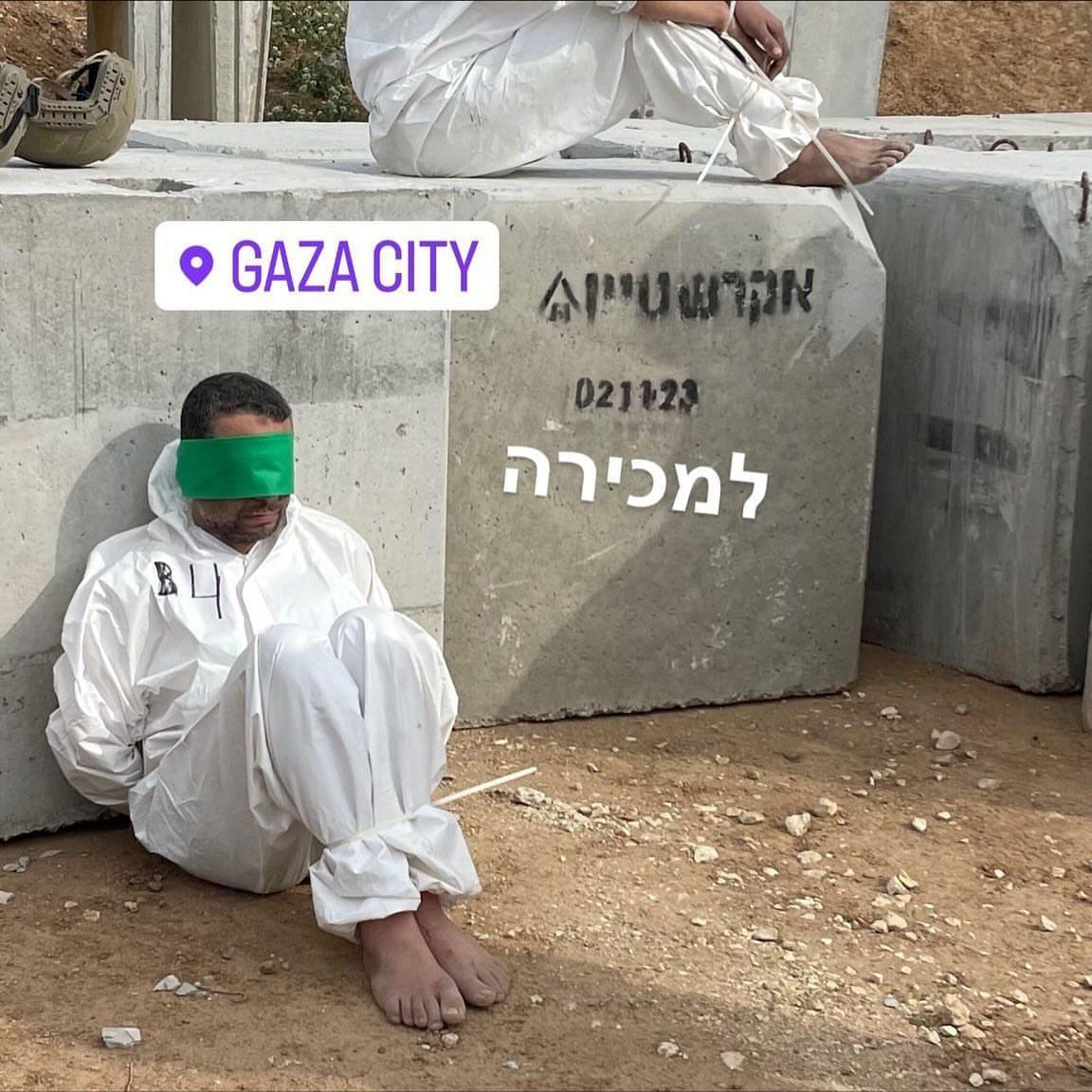
On 20 August 2024, the unimaginable happened for the family of Mohammed Shorrab, a 41-year-old man form Gaza, living with a mental health condition that required continuous social and family care. Mohammed went out for evening prayers, and his family never saw him again.
Piecing together the events leading up to his disappearance, we know that relatives had seen him in the Al-Mawasi area that same evening and had escorted him to the grounds of Al-Aqsa University in Khan Younis. After that, he vanished.
After a year and a half of desperate searching, posting online, handing out flyers, and combing the internet, Mohammed’s family recognised him in a photo circulating online.
On 18 November 2025, an Israeli soldier named Harel Amshika published a nine-image carousel on his personal Instagram account. In the caption, written in Hebrew, he thanked his unit, the Mesaya’ay (Support) Company of the Shaked Battalion, which falls under the Givati Brigade of the Israeli military.
One of the photographs in that carousel showed a Palestinian man seated on the ground against a cement block. His hands were bound. His feet were bound with plastic zip ties. He was barefoot and his eyes blindfolded with a green cloth. He was wearing a white plastic hazmat suit, with the inscription “B4” handwritten on his chest with a thick black marker. Over the image, was written “למכירה” meaning “for sale” in Hebrew.
Mohammed’s mother, Zahra, recognised her son’s hair, his hands, his feet, as any mother would, even with his eyes covered by the blindfold, she knew it was her son.
Israel’s systematic dehumanising of Palestinians
Interviewed by journalist Ali Alasmer about her son’s disappearance, Zahra Shorrab asks the disturbing question raised by the photograph – have Palestinian lives become so cheap that they can be put up for sale, and are her people are no longer considered human beings? Posting a photo of a vulnerable person, bound and blindfolded – joking that he is ‘for sale’, fits a pattern of dehumanisation, turning human suffering into entertainment.
Zahra Shorrab “…But tell me, people — has the Palestinian become so cheap that they are putting him up for sale? We are appealing [to you]. What is happening to us is cruel. We ask, we ask everyone outside and inside [the country]. This is cruel. It is unbearable that they are scattering us like this and that a Palestinian is being offered for sale. Have we really become so worthless? Do human beings no longer have any worth? We are human beings. We are people, human beings. and this [man] is a human being. How can they reduce him to something worthless like that?”
Sinister photos like the one of Mohammed are not uncommon on Israeli soldier’s social media accounts. It is clear from such evidence, witness testimony, and from soldiers’ own accounts, that the IDF has a fundamental and broad disregard for the Geneva Conventions
This is not just a problem isolated to individual soldiers or leadership; but a military policy being enacted with total impunity. A systematic dehumanisation of Palestinians that means soldiers feel free to share their crimes with friends and family on social media.
Inquiry made to the Israeli military
After Mohammed was identified in the photograph, GLAN coordinated with HaMoked — the Center for the Defence of the Individual, an Israeli human rights organization that has legal standing to inquire about Palestinians held by Israel. On 26 February 2026, HaMoked submitted a formal written inquiry to the Israeli Prison Service on the family’s behalf, seeking Mohammed’s location.
The Israeli Prison Service responded that following a review of their records, no indication was found that Mohammed Shorrab was being detained or held in any of their facilities. He was not registered. And yet the photograph exists. The soldier who took it has been named. The unit has been identified. The brigade has been confirmed as operating in the area at the relevant time.
On 8 March 2026, GLAN submitted a detailed Request for Information to the IDF’s Spokesperson unit, demanding an explanation for the evidence that Mohammed had been abused and abducted by soldiers. The Spokesperson’s Unit said it would not respond to GLAN’s query about Mohammad or any subsequent requests for information, because they do not engage with lawyers, only journalists.
The crucial questions remain, why was Mohammad detained, and what happened to him?
GLAN’s Legal Co-Lead discusses the case and other recent investigations with Owen Jones.