Special hearing
On 9 October, a special hearing of the Court of Appeal took place to decide whether to grant permission to challenge the High Court’s decision that failed to halt British F-35 exports to Israel, being used in Gaza. Permission applications like this are usually paper-based, but as this case raises such important legal questions, the Court of Appeal has decided that it must be held in open court and will be live-streamed to the public.
In July this year, the UK High Court ruled that it was for parliament and not the court to decide whether the government’s F-35 ‘carve-out’ decision breaches the UK’s international legal obligations in the case of Al-Haq vs. Secretary of State for Business and Trade.
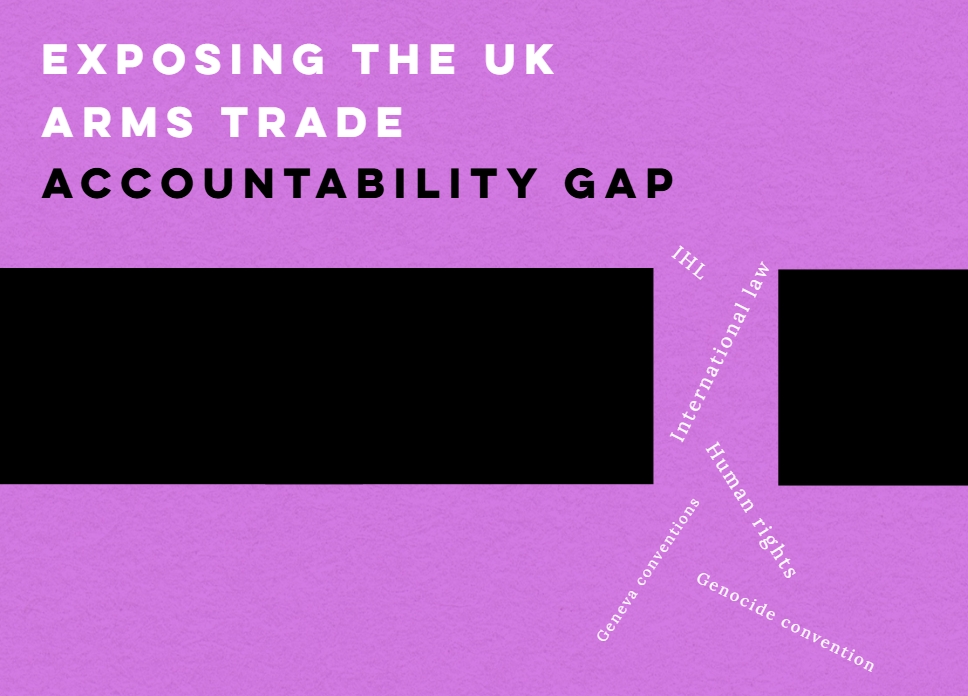
The original challenge, brought in December 2023, aimed to stop all arms sales from the UK to Israel, and following the suspension of some arms licenses in September 2024, it then focused on the F-35 ‘carve out’ which effectively created a loophole that has allowed British made weapons to continue to be exported to Israel for use in Gaza through the global spares pool. We believe the court’s ruling, that it has no jurisdiction over the government’s decision raises serious constitutional questions and demonstrates a ‘glaring gap in accountability’. A gap that has now allowed the UK to arm and provide military support to Israel for two years, despite the fact it has flagrantly committed violations of international law against the Palestinian people on a daily basis.
The High Court also declined to pass judgment on the government’s genocide assessment and on whether the government’s decision to continue supply of F-35s to the global spares pool was consistent with its duty to prevent genocide. The issue of the government’s genocide assessment and therefore its ability to act in line with its duty to prevent genocide, has been one of the most troubling aspects of the case. On 26 January 2024, the International Court of Justice in the case Application of the Convention on the Prevention and Punishment of the Crime of Genocide in the Gaza Strip (South Africa v. Israel), ruled that there was plausible risk Israel was committing genocide in Gaza, it issued provisional measures to Israel and reminded member states of their obligations under the Genocide Convention.
Nine months later, despite repeated warnings from the UN, genocide scholars and human rights groups of the situation in Gaza, the UK government revealed its own genocide assessment of Israel’s conduct in court. Their assessment wrongly analysed Israel’s conduct of hostilities on an incident by incident basis, rather than looking at overall patterns, such as repeated attacks on hospitals; the repeated mass population transfer orders issued by Israel with nowhere safe to flee; or the sheer scale of destruction of civilian infrastructure, including homes and agricultural land necessary for the survival of the population. By September 2024, a clear pattern of attacks on hospitals, UN buildings and humanitarian staff had emerged, there had been over 10,000 airstrikes on Gaza, and over 40,000 people had been killed, yet the UK Government assessed just 413 of thousands of alleged breaches of International Humanitarian Law (IHL) by Israel and concluded that only one, the attack on foreign staff from the World Central Kitchen, amounted to a possible breach.
The UK government claimed it had seen no evidence of deliberate attacks against women and children, despite having been provided with evidence including video footage of the sniping of a grandmother as she walked with her grandson, holding his hand. The Government undertook its assessment on the basis that it needed incident-specific evidence from Israel and deemed it acceptable that Israel was not willing to provide this. It ignored statements of intent from Israeli soldiers on the ground in Gaza, and from senior Israeli governmental and military officials and instead gave weight to diplomatic assurances from Israel. The UK’s own Strategic Export Licensing Criteria state that licenses must be refused if there exists a “clear risk that the item might be used to commit or facilitate a serious violation of international humanitarian law”.
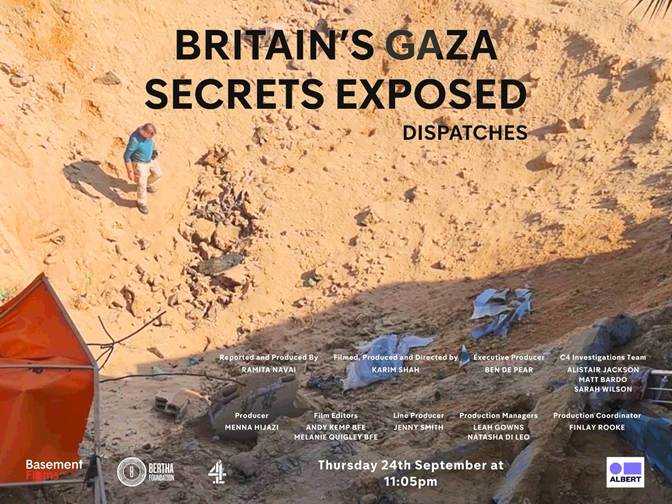
In September 2024, under threat of injunction, the UK Government reached the assessment that the “clear risk” threshold was met, and suspended 29 arms licenses to Israel of weapons for use in Gaza, but departed from its own domestic rules in order to create a carve-out for UK components of the F-35 fighter jet that continue to reach Israel via the global spares pool. The government has said this is the only exception – yet a new report analysed and fact checked by Channel4 this month, has found that £400,000 of military goods from the UK passed through Israeli customs in June 2025– the highest amount in a single month since records began three years ago. The exact nature of the goods is unknown, but they were listed under the category that includes bombs, grenades, torpedoes, missiles and mines.
The government argued that it’s F-35 decision was a matter of ‘international peace and security’ and justified their decision through their assessment that a breach of IHL, so serious as genocide, was not taking place in Gaza.
Two months after the High Court declined to rule on the case, on 1 September 2025, nearly two years into Israel’s continued attacks on Gaza, David Lammy publicly confirmed the government’s position after being pressed by the chair of the International Development Committee, Sarah Champion. In a written reply to Champion, Lammy cited the assessment made in Al-Haq vs. The Secretary of State for Business and Trade, and stated: “as per the Genocide Convention, the crime of genocide occurs only where there is specific “intent to destroy, in whole or in part, a national, ethnic, racial or religious group.” The Government has not concluded that Israel is acting with that intent.” This was despite the fact that in May 2025, Parliamentary Under-Secretary of State for the Middle East, Hamish Falconer stated in parliament: “It is the UK government’s long-standing position that any formal determination as to whether genocide has occurred is a matter for a competent court, and not for governments or non-judicial bodies.”
On 19 September, two weeks after David Lammy went against the UK government’s long-standing position and shared their own assessment, the UN Commission of Inquiry on the Occupied Palestinian Territory found that genocide is being committed in Palestine. The Commission cited statements by Israel’s leaders, and the pattern of Israel’s military actions, as evidence of genocidal intent. The Commission said states must “employ all means reasonably available to them to prevent the commission of genocide in the Gaza Strip” and stop arms sales to Israel where there is reason to believe they’ll be used in genocide. On 29 September, delegates at the Labour Party conference voted to acknowledge and accept the UN’s conclusion that Israel is committing a genocide in Palestine and to demand comprehensive sanctions, including a full arms embargo, in line with its obligations under international law. Yet, as of 3 October 2025, the government continues to supply F-35 parts and give military support to Israel, which has now killed at least 66,000 people in Gaza, including more than 20,000 children, with thousands still buried under the rubble and unaccounted for. The UK government is now in a highly difficult position given that it is still not complying with its international obligations, or even in line with the wishes of its own party.
Whatever the outcome of the appeal hearing, the UK’s legal duties under the Genocide Convention and its own domestic law require an urgent end to all military cooperation with Israel, including the export of F-35 parts.
When we joined this case over two years ago, we could never have imagined the destruction, devastation and inhumanity that has been wrought on Gaza, in-part facilitated by military support and diplomatic cover from the UK government.
We welcome the UK governments long-overdue recognition of the State of Palestine, but it is an empty gesture if the genocide against the people of Palestine is not permanently stopped. We cautiously welcome news of a ceasefire, but we know that violence against the Palestinian people continues every day that Israel’s illegal occupation does. We stand firm in our fight to uphold the rule of law and hold states committing violations, accountable. We are proud to have worked alongside other leading human rights and civil society organisations, including the interveners in this case (Human Rights Watch, Amnesty International and Oxfam).